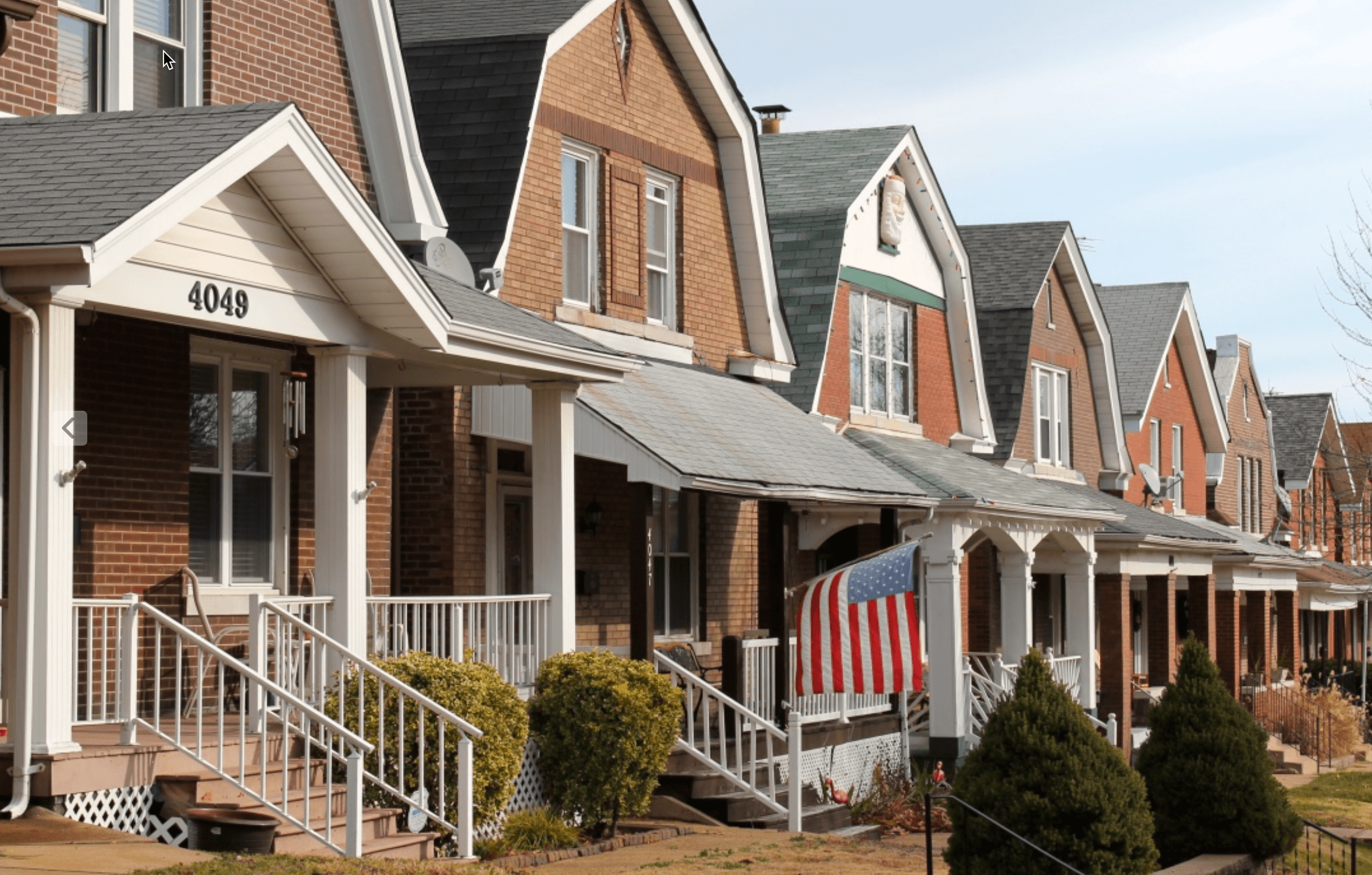
When we talk about affordable housing, the conversation often focuses on building new homes. But in a city like St. Louis, preserving the homes we already have can be just as important.
A May 2025 article in the St. Louis Business Journal highlighted something I think deserves more attention: $5.4 million in federal affordable housing grants awarded to three St. Louis-area nonprofits, with support from two local banks.
The funding, provided through the Federal Home Loan Bank of Des Moines and sponsored by Midwest BankCentre and Enterprise Bank & Trust, will help repair existing homes and create affordable rental housing across St. Louis City and County.
According to the article, the grants will benefit 222 low-income households.
What I particularly appreciate about these projects is that they’re not just focused on creating additional housing. Much of the funding will help people remain in the homes and neighborhoods where they’ve already established their lives.
And I think that’s an important part of the affordable housing conversation that often gets overlooked.
Affordable Housing Isn’t Just About Building More Homes
When people hear the term “affordable housing,” they often think about new apartment buildings, subsidized developments, or programs designed to help first-time buyers purchase homes.
Those are all important, but there’s another side to the issue.
What happens when someone already owns a home but can no longer afford to maintain it?
I’ve spent 15 years working in St. Louis real estate, much of that time in neighborhoods filled with older homes. One thing I’ve learned is that maintaining these properties can be expensive, particularly as they age.
A roof replacement can cost tens of thousands of dollars. Updating an outdated electrical system, replacing an HVAC system, or addressing foundation and water intrusion issues can create significant financial challenges.
For homeowners living on fixed incomes, particularly seniors, those expenses can be overwhelming.
And putting off necessary repairs often makes the situation worse.
That’s why I think programs that help existing homeowners maintain their properties are every bit as important as programs that create new housing.
Helping Longtime Residents Stay in Their Homes
A substantial portion of the funding will go toward repairs for homeowners in North and South St. Louis County.
Beyond Housing received approximately $3.9 million to help homeowners in communities including Berkeley, Jennings, Bel-Nor, Pagedale, Pine Lawn, and several others.
The Housing Partnership received another $1.2 million to rehabilitate 60 homes owned by seniors and individuals with disabilities in Lemay, Affton, and Mehlville.
These aren’t necessarily cosmetic improvements.
The projects include roof replacements, electrical and plumbing repairs, accessibility modifications, and improvements to make homes safer and more energy-efficient.
For someone who has lived in their home for 30 or 40 years, these repairs can make the difference between remaining in the property and having to move.
There’s also a broader neighborhood benefit.
When homeowners have the resources to maintain their properties, it helps preserve the surrounding housing stock and prevents homes from deteriorating to the point where rehabilitation becomes financially impractical.
That’s especially important in St. Louis, where so much of our residential architecture is older and requires ongoing investment.
A Vacant Building on Chippewa Gets a Second Life
One of the projects that particularly caught my attention is right here in South St. Louis.
The Tower Grove Community Development Corporation received a $219,266 grant to rehabilitate a vacant multifamily building at 3772 Chippewa Street in Dutchtown.
The project will transform the property into two rental units, one with three bedrooms and another with four, providing housing for immigrant families in partnership with the International Institute of St. Louis.
I love seeing projects like this.
As someone who lives in South City and works extensively with its older housing stock, I know how much potential exists in buildings that have been sitting vacant or neglected.
St. Louis has an incredible inventory of historic homes and multifamily buildings, but maintaining and rehabilitating them isn’t always financially feasible without additional assistance.
Vacant buildings can become liabilities for surrounding neighborhoods, particularly when they sit empty for years.
Bringing those properties back into productive use accomplishes several things at once.
It preserves existing housing, adds residents to the neighborhood, provides much-needed rental options, and helps stabilize the surrounding community.
And in this particular case, the larger bedroom counts are especially valuable. Affordable rental housing that can accommodate larger families isn’t always easy to find.
I’d much rather see a building like this rehabilitated and occupied than continue sitting vacant.
Preserving St. Louis Neighborhoods Requires Investment
One of the things I appreciate most about St. Louis is the character of its neighborhoods.
From the brick homes of Tower Grove South and Dutchtown to the older residential communities throughout North County, our housing stock tells the story of the region.
But older homes require maintenance, and deferred maintenance can become a serious problem.
When properties fall into disrepair, the consequences extend beyond the individual homeowner.
Vacant and deteriorating buildings can affect neighboring property values, discourage additional investment, and make it more difficult for communities to attract new residents.
Conversely, maintaining existing homes and returning vacant properties to productive use can help create a more stable neighborhood.
That’s why I think housing preservation deserves more attention when we discuss economic development in St. Louis.
We often celebrate major new construction projects, and understandably so.
But helping someone replace a failing roof so they can remain in the home they’ve owned for decades is also a meaningful investment in our region.
It may not generate the same headlines, but the impact can be just as significant.
The Role of Local Banks and Nonprofits
Another aspect of this story worth recognizing is the collaboration between local financial institutions and nonprofit organizations.
Midwest BankCentre and Enterprise Bank & Trust sponsored the grant applications through the Federal Home Loan Bank of Des Moines.
The funding will be administered through organizations that already work directly with residents and understand the needs of their communities.
Beyond Housing, The Housing Partnership, and the Tower Grove Community Development Corporation each serve different areas and populations.
That local knowledge matters.
The housing challenges facing a senior homeowner in Lemay aren’t necessarily the same as those facing an immigrant family looking for affordable rental housing in Dutchtown.
Programs are more effective when they’re designed around the actual needs of the people and neighborhoods they’re intended to serve.
I also appreciate that these projects involve partnerships between organizations with different areas of expertise.
Affordable housing is a complicated issue, and there’s no single organization or funding source that’s going to solve it.
We Need More of This in St. Louis
St. Louis remains relatively affordable compared to many larger metropolitan areas, but that doesn’t mean housing affordability isn’t a serious concern here.
Home prices have increased considerably over the past several years, and higher mortgage rates have made purchasing a home more difficult for many buyers.
At the same time, existing homeowners are dealing with rising insurance premiums, property taxes, maintenance expenses, and the cost of major repairs.
For lower-income households, those costs can threaten their ability to remain in their homes.
I think it’s important that our approach to affordable housing addresses both sides of the equation: helping people find housing they can afford and helping existing residents maintain the housing they already have.
We also need to continue finding ways to bring vacant properties back into use.
St. Louis has no shortage of buildings with potential. What we often lack is the financial structure that makes rehabilitation economically viable.
Programs like these grants help close that gap.
My Take: Strong Neighborhoods Start With Stable Housing
As a real estate agent, I spend a lot of time talking about property values, market conditions, and what makes certain neighborhoods desirable.
But healthy neighborhoods are about much more than rising home prices.
They’re also about longtime residents being able to remain in their homes, families having access to safe and affordable housing, and vacant properties being brought back to life.
That’s why I was encouraged to read about these grants.
The $5.4 million won’t solve every housing challenge facing St. Louis. But helping 222 households maintain or access affordable housing is a meaningful step.
And I particularly appreciate that much of the investment is going toward preserving what we already have.
St. Louis has an extraordinary collection of historic neighborhoods and older homes. Protecting that housing stock while making sure people can continue to afford living here should be an important part of our region’s future.
I’d love to see more partnerships like these, particularly those focused on rehabilitating vacant buildings and helping longtime homeowners remain in their communities.
Because preserving our neighborhoods shouldn’t just mean preserving the buildings.
It should also mean preserving the opportunity for people to call those neighborhoods home.
Source: James Drew, “St. Louis banks sponsor $5.4M in federal grants for affordable housing work,” St. Louis Business Journal, May 8, 2025.

Leave a Reply