Let’s be honest.
Most people think the first step in buying a home is opening Zillow, setting a price filter, and falling in love with a house that’s definitely at the top of their budget. Maybe slightly over. Okay, way over—but it has great light!
I get it. Looking at homes is the fun part.
But here’s the truth most buyers learn a little later than they’d like:
The first step in buying a home isn’t scrolling listings.
It’s understanding what you can comfortably afford—not just what a lender approves.
And those are two very different numbers.
Why “What I Qualify For” Isn’t the Same as “What I Should Spend”
When buyers get pre-approved, the number they’re given is a maximum—not a recommendation.
Think of it like this:
Just because your credit card has a $10,000 limit doesn’t mean it’s a great idea to use all of it on one purchase and call it a day.
Lenders look at:
- Income
- Debt ratios
- Credit history
They don’t look at:
- How much you like to travel
- Whether you enjoy eating out
- Your hobbies, kids, pets, or lifestyle
- How you want your monthly life to feel
That’s where the gap shows up—and where many buyers start feeling house-poor faster than expected.
The Real Questions Buyers Should Be Asking First
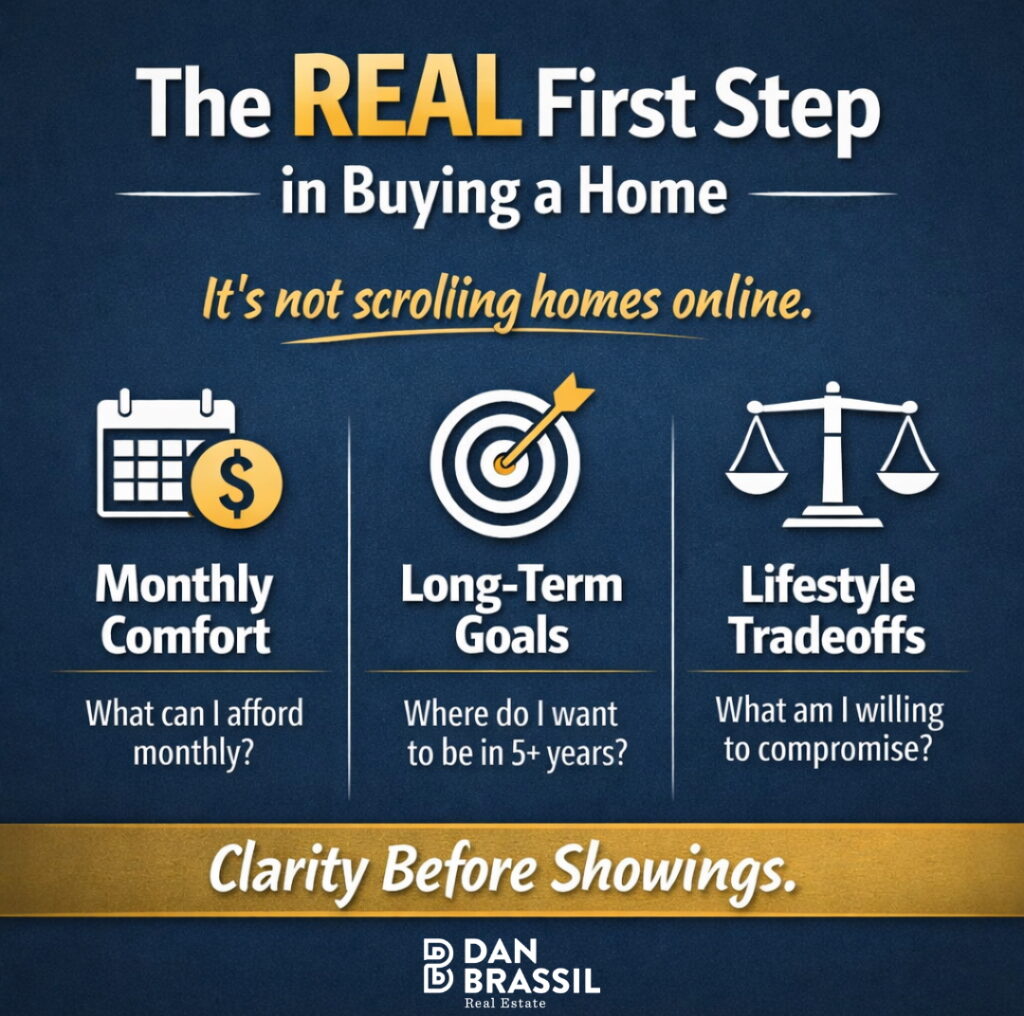
Before showings ever make sense, buyers need clarity in three key areas.
1. Monthly Comfort (Not Monthly Max)
A healthy budget is one that lets you:
- Pay your mortgage
- Save money
- Still enjoy your life
If your payment leaves you stressed every month, it doesn’t matter how great the house is—eventually, it stops feeling like home.
A smart starting point is asking:
“What payment lets me sleep well at night?”
That answer is far more useful than a lender’s ceiling.
2. Long-Term Goals
Buying a home isn’t just about now—it’s about what comes next.
Ask yourself:
- How long do I plan to stay?
- Is this a starter home or a longer-term place?
- Do I expect career, family, or lifestyle changes?
The right price point today depends heavily on how long you plan to own the home. Short-term plans and long-term commitments call for very different strategies.
3. Lifestyle Tradeoffs (Because There Are Always Tradeoffs)
Every home purchase involves choices:
- Location vs. size
- Newer vs. character
- Payment vs. flexibility
The goal isn’t to eliminate tradeoffs—it’s to choose the ones you can live with comfortably.
When buyers skip this step, they often end up loving the house… but resenting the lifestyle changes that came with it.
Why This Step Changes Everything That Comes Next
When buyers understand their true comfort zone, everything else gets easier:
- Home searches become more focused
- Decisions feel clearer
- Offers are written with confidence
- Stress drops significantly
Instead of reacting emotionally to every listing, buyers move strategically—and that almost always leads to better outcomes.
Zillow Isn’t the Enemy (It’s Just Not Step One)
There’s nothing wrong with browsing listings. It’s fun. It’s exciting. It’s part of the process.
But starting there is like planning a road trip by picking the playlist before checking the gas tank.
Once you understand your numbers, goals, and priorities, then the house hunt becomes productive—and a lot more enjoyable.
Final Thought
The best buyers aren’t the ones who find the most listings.
They’re the ones who start with clarity.
If you’re thinking about buying a home, take a step back before diving into listings. A little preparation up front can save you a lot of stress—and money—later.
And yes… Zillow will still be there when you’re ready.

Leave a Reply