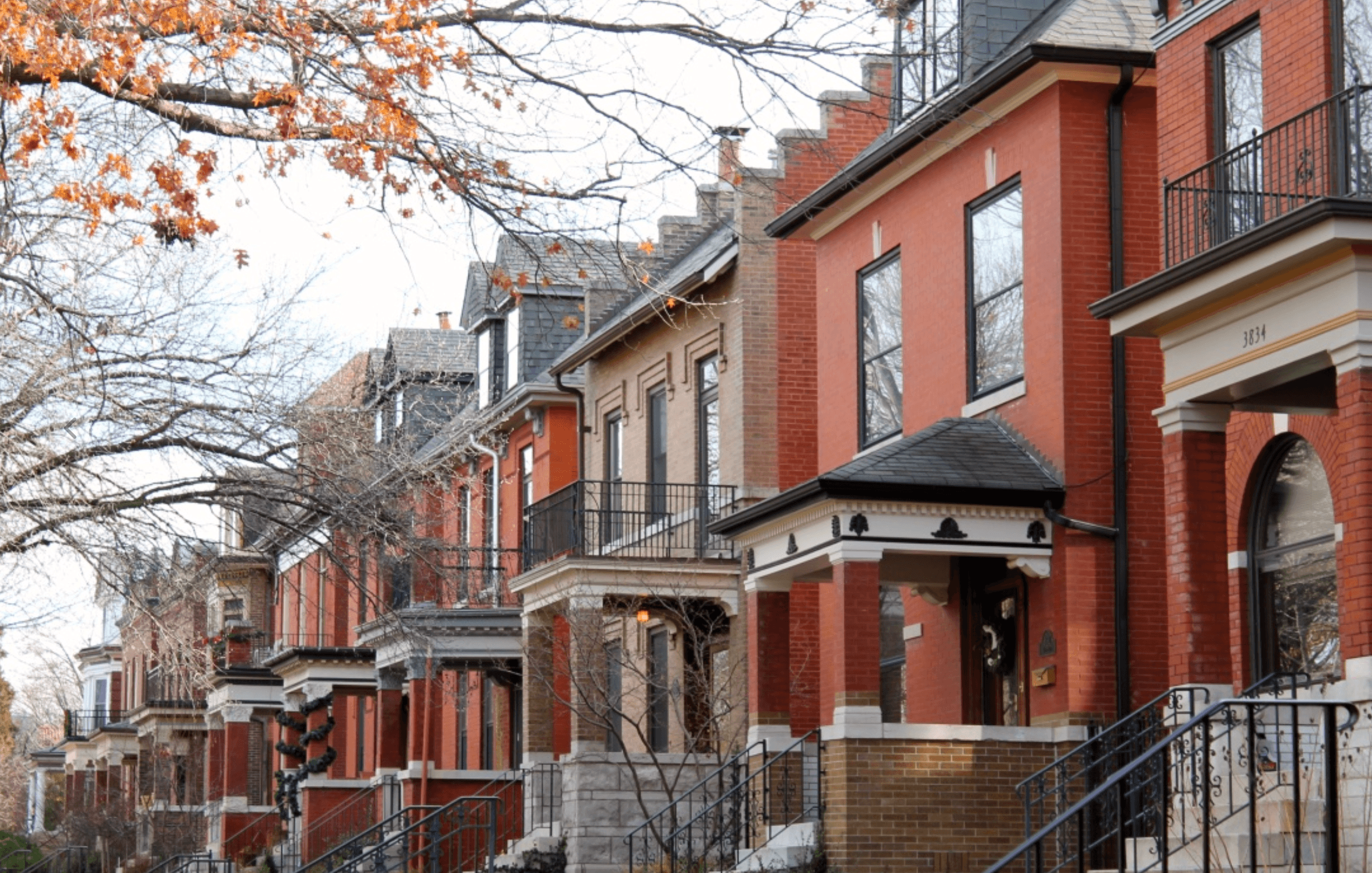
More homes are sitting on the market, buyers have more negotiating power, and sellers are growing frustrated. But that doesn’t necessarily mean home prices are about to drop.
An October 14 article in the St. Louis Business Journal, titled “It’s a buyer’s market for housing, but that doesn’t mean price cuts are coming,” caught my attention because it reflects much of what I’m experiencing in the St. Louis real estate market right now.
According to the article, which cites data from Redfin, there were 62.6% more home sellers than buyers nationwide in September. That’s a pretty significant imbalance, especially considering how competitive the housing market was just a few years ago.
You might assume that having so many more sellers than buyers would lead to substantial price reductions. But that’s not necessarily happening.
And I think there’s a good reason why.
Sellers Aren’t Under the Same Pressure They Were in 2008
One of the biggest differences between today’s housing market and the market leading up to the Great Recession is the financial position of homeowners.
Many sellers have substantial equity in their homes. Others have mortgage rates below 4%, and some own their properties outright.
That gives them something sellers didn’t always have during previous housing downturns: the ability to wait.
I’m seeing this firsthand with some of my listings in St. Louis.
When a home isn’t generating the showing activity we’d like, the conversation naturally turns to pricing. But reducing the asking price isn’t always the direction a seller wants to go, particularly if they don’t have an immediate need to move.
Instead, some sellers are willing to keep their homes on the market longer, take a break during the slower winter months, or simply wait until market conditions improve.
That’s very different from a market where homeowners are facing foreclosure or have no choice but to sell.
A Buyer’s Market Doesn’t Necessarily Mean Affordable Homes
One quote from the article really stood out to me.
Redfin economist Asad Khan described the current situation as a buyer’s market driven by caution rather than strength.
I think that’s an important distinction.
Buyers may have more negotiating power today, but that doesn’t mean buying a home has become more affordable.
Mortgage rates remain elevated compared to what buyers became accustomed to a few years ago. Home prices are still relatively high, and the combined cost of principal, interest, taxes, and insurance continues to stretch household budgets.
For buyers who can comfortably afford a home, however, there are some real opportunities.
They’re often facing less competition, have more time to evaluate properties, and may be able to negotiate terms that would have been difficult to obtain during the frenzy of 2020 through 2022.
I’ve seen buyers become much more selective. They’re paying closer attention to condition, layout, location, and whether a property is priced appropriately.
And unlike a few years ago, many are perfectly comfortable walking away from a house that doesn’t check enough boxes.
That’s not necessarily a bad thing. I think a more deliberate buying process is healthier than one where people feel pressured to make enormous financial decisions in a matter of hours.
What I’m Seeing in St. Louis
One thing I’ve learned over my 15 years in real estate is that there’s rarely a single housing market, even within the same city.
St. Louis is a perfect example.
A well-maintained, appropriately priced home in a desirable neighborhood can still attract significant interest and sell relatively quickly.
Meanwhile, another property just a few miles away might sit for months without generating much activity.
Even within the same neighborhood, the difference between a successful listing and one that struggles can come down to pricing, condition, layout, or the number of competing properties.
I’m currently working with sellers experiencing very different levels of buyer interest.
Some properties are attracting showings, while others are seeing very little activity despite professional photography, extensive marketing, and pricing that would have been considered reasonable not long ago.
I don’t think that necessarily means those homes have suddenly lost substantial value.
What it tells me is that the pool of active buyers has become smaller and more selective.
And when fewer buyers are looking, it can take considerably longer to find the right match for a particular property.
The Growing Gap Between What Sellers Want and What Buyers Will Pay
Another interesting point in the article was the widening difference between asking prices and actual sale prices.
In Nashville, for example, the article noted that 42% of active listings had reduced their asking prices, with a median reduction of $20,500.
I wouldn’t apply those numbers directly to St. Louis, but the underlying issue is familiar.
Many sellers are still basing their expectations on what comparable homes sold for during the exceptionally competitive market of the past several years.
Buyers, on the other hand, are looking at today’s mortgage payments, the number of available properties, and how long homes have been sitting on the market.
Those two perspectives don’t always line up.
I’ve had conversations with sellers who understandably question why their home isn’t attracting more attention when similar properties sold quickly for strong prices a year or two ago.
The challenge is that yesterday’s sale prices don’t always reflect today’s buyer behavior.
At the same time, I don’t believe every home that’s sitting on the market needs a dramatic price reduction.
Pricing matters, but so do timing, presentation, competition, and the number of buyers actively searching in a particular price range.
Sometimes a price adjustment makes sense. Other times, reducing the price may accomplish very little if there simply aren’t enough buyers looking for that type of property.
The difficult part is determining which situation you’re dealing with.
Why I Don’t Expect a Major Housing Price Crash
The article makes a compelling argument against the idea that we’re headed toward another 2008-style housing collapse.
I generally agree.
The financial circumstances of today’s homeowners are very different, and the widespread distress that contributed to the previous housing crisis simply isn’t present on the same scale.
That doesn’t mean home values can’t decline.
I wouldn’t be surprised to see some properties sell for less than comparable homes did a year ago, particularly in areas with more inventory or where sellers initially priced too aggressively.
But I think we’re more likely to see a prolonged period of slower sales, longer marketing times, and relatively flat prices than a dramatic decline across the entire St. Louis market.
Of course, that’s a general outlook. Individual neighborhoods and property types can behave very differently.
What This Means for Buyers and Sellers
For buyers, I think this is one of the more interesting markets we’ve experienced in years.
There may be fewer people competing for the same properties, and sellers are often more willing to consider reasonable offers, inspection requests, and other concessions.
That doesn’t mean every home is a bargain. But buyers who are financially prepared and willing to be patient may find opportunities that simply weren’t available a few years ago.
For sellers, the biggest adjustment may be expectations.
A home taking 60 or 90 days to sell doesn’t automatically mean something is wrong with it. But it does mean we need to pay close attention to showing activity, competing listings, buyer feedback, and pricing.
It also means sellers need to be realistic about how long the process could take.
One of the conversations I’m having more frequently is whether it makes sense to continue marketing a property through the slower winter months or temporarily take it off the market and revisit things in the spring.
There’s no universal answer. It depends on the property, the seller’s circumstances, and what we’re seeing in that particular segment of the market.
My Take: The Market Is Changing, but Not Necessarily Crashing
I think the biggest takeaway from the St. Louis Business Journal article is that we’re experiencing a housing market where buyers and sellers have very different expectations.
Buyers want relief from years of rising prices and higher borrowing costs.
Sellers want to preserve the equity they’ve built and aren’t particularly motivated to accept substantially less than they believe their homes are worth.
And because many sellers have the financial flexibility to wait, we’re seeing that disagreement play out through longer days on market and fewer transactions rather than widespread price declines.
For St. Louis, I think this means we’re going to continue seeing a market that varies considerably by neighborhood, price point, and property condition.
There will still be homes that sell quickly and others that struggle to attract attention.
There will be opportunities for buyers, but not necessarily the steep discounts some are expecting.
And sellers will need to recognize that the market has changed, even if home values haven’t fallen dramatically.
After 15 years of helping people buy and sell homes in St. Louis, one thing remains consistent: understanding what’s happening in your specific neighborhood and price range is far more useful than relying on national headlines.
Thinking about buying or selling a home in St. Louis?
I’m always happy to talk through what’s happening in the market, whether you’re planning to make a move soon or just trying to understand where things stand. No pressure, just an informed conversation about your options.
Source: Andy Medici, “It’s a buyer’s market for housing, but that doesn’t mean price cuts are coming,” St. Louis Business Journal, October 14, 2026.

Leave a Reply